By Jim Carchidi
June 9, 2026
An effort to encourage private investments by changing development standards in Orlando’s Downtown Historic District passed its first vote at the June 8 City Commission Meeting.
Lifting restrictions
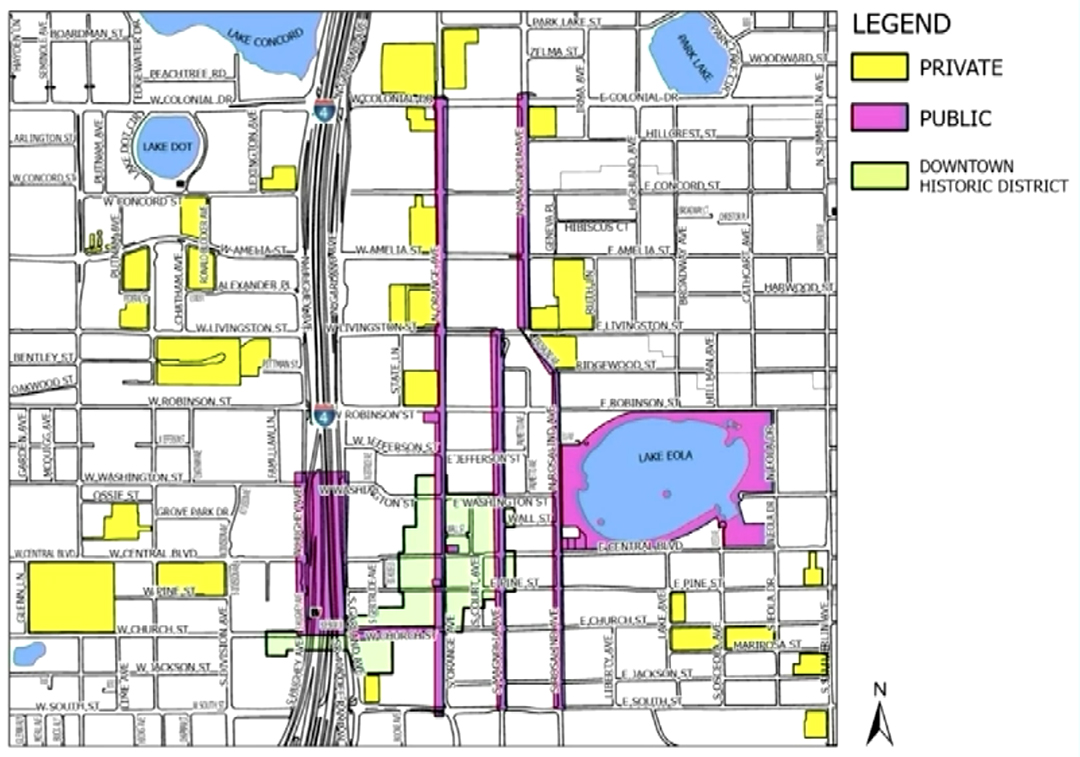 A Central Business District map provided by the city illustrates areas of public and private investments over the last 15 years. The Historic District, highlighted in green, shows the least activity.
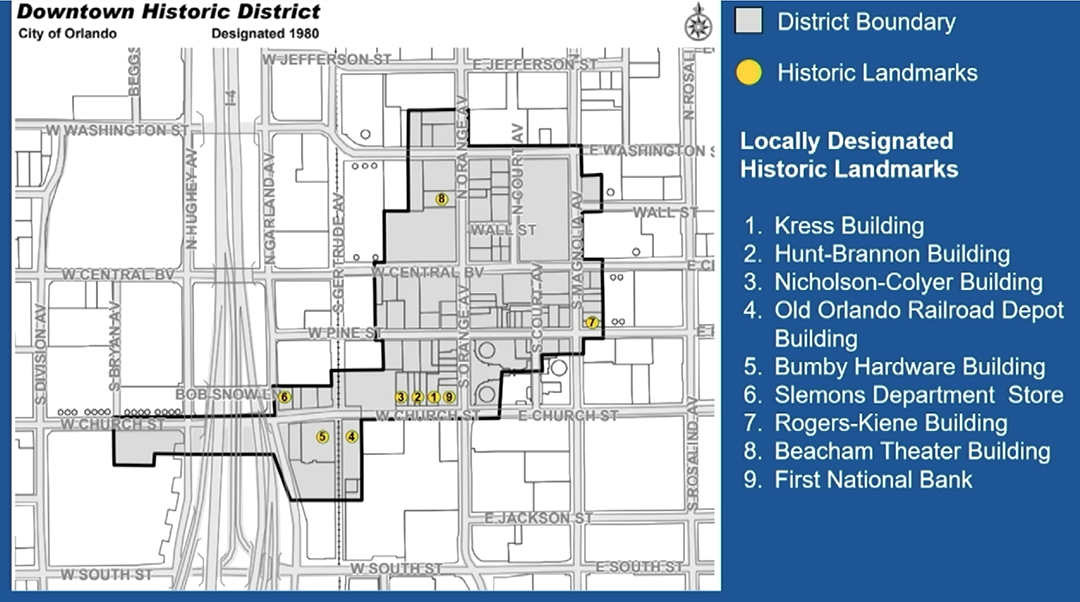
The Downtown Historic District spans eight blocks and nine locally designated historic landmarks. Projects within the district require certification from the Historic Preservation Board (HPB), but city officials and developers contend federal restrictions protecting historic structures have stifled private investments. Historic preservationists say the city is trying to blame vacancies and blight on development standards instead of addressing crime and attracting retailers over large-scale redevelopment projects.
Last week The Orlando Real reported on a proposal from the Economic Development Department for a three-year moratorium on HPB certification within the district. Proposals would go before the city’s Appearance Review Board with federal standards replaced by downtown design guidelines. The proposal offers developers a 50% to 75% refund of the incremental property tax over 10 years as an incentive for preserving historic components and designs.
Those in favor
Developer Craig Ustler was one of only four proponents to speak during public comments. He stated his respect for the HPB, but said it has become “a victim of overly restrictive standards” and that a balance needs to be struck between economic development and historic context.
“Great cities have great old buildings and great new buildings, it’s not one or the other,” he said. “It's heartbreaking, honestly, to see the vacancy and underutilization of a lot of the properties downtown.”
Lowndes law firm president Quino Martinez also spoke in favor of the moratorium, saying it was a pause of policy, not a repeal.
Those opposed
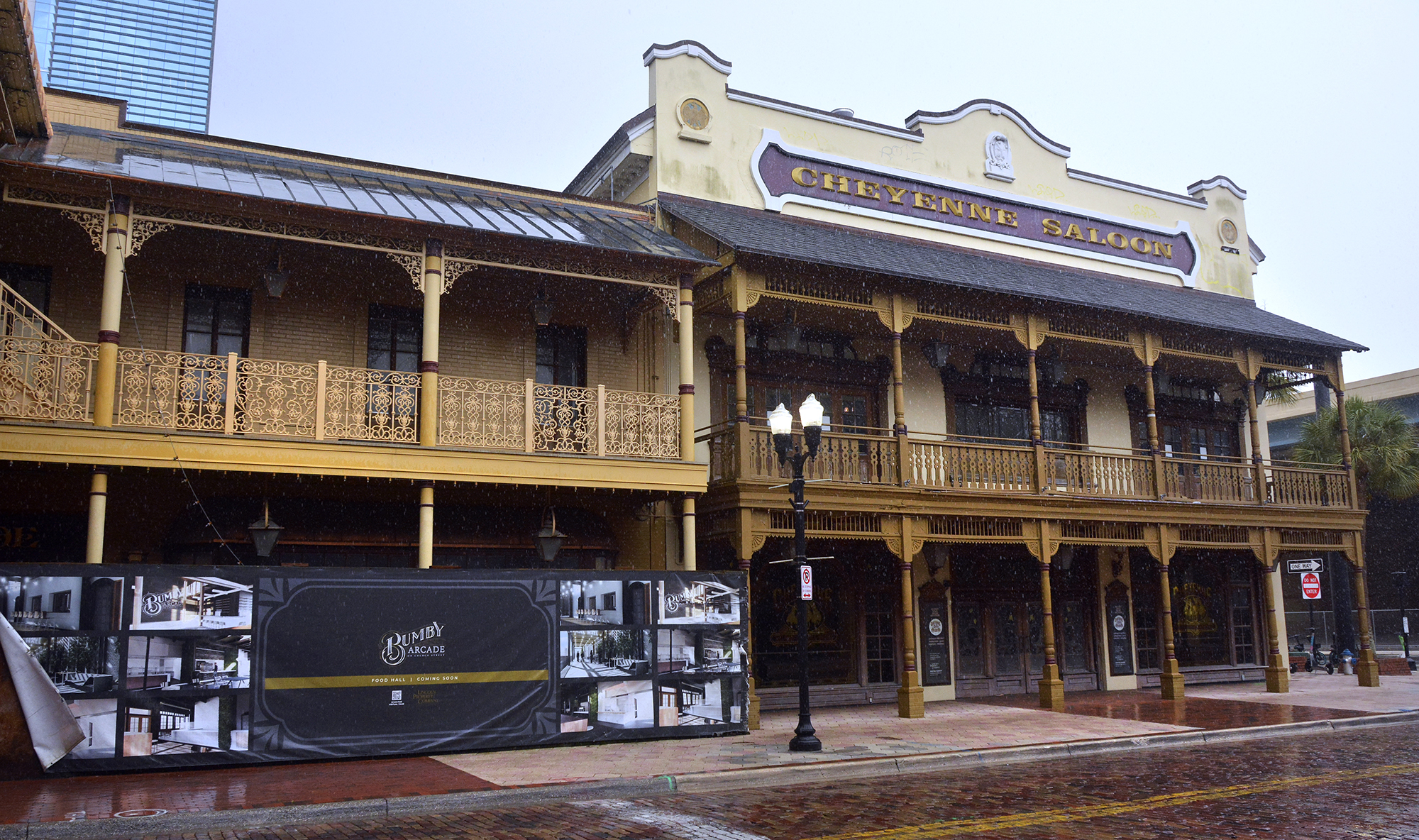
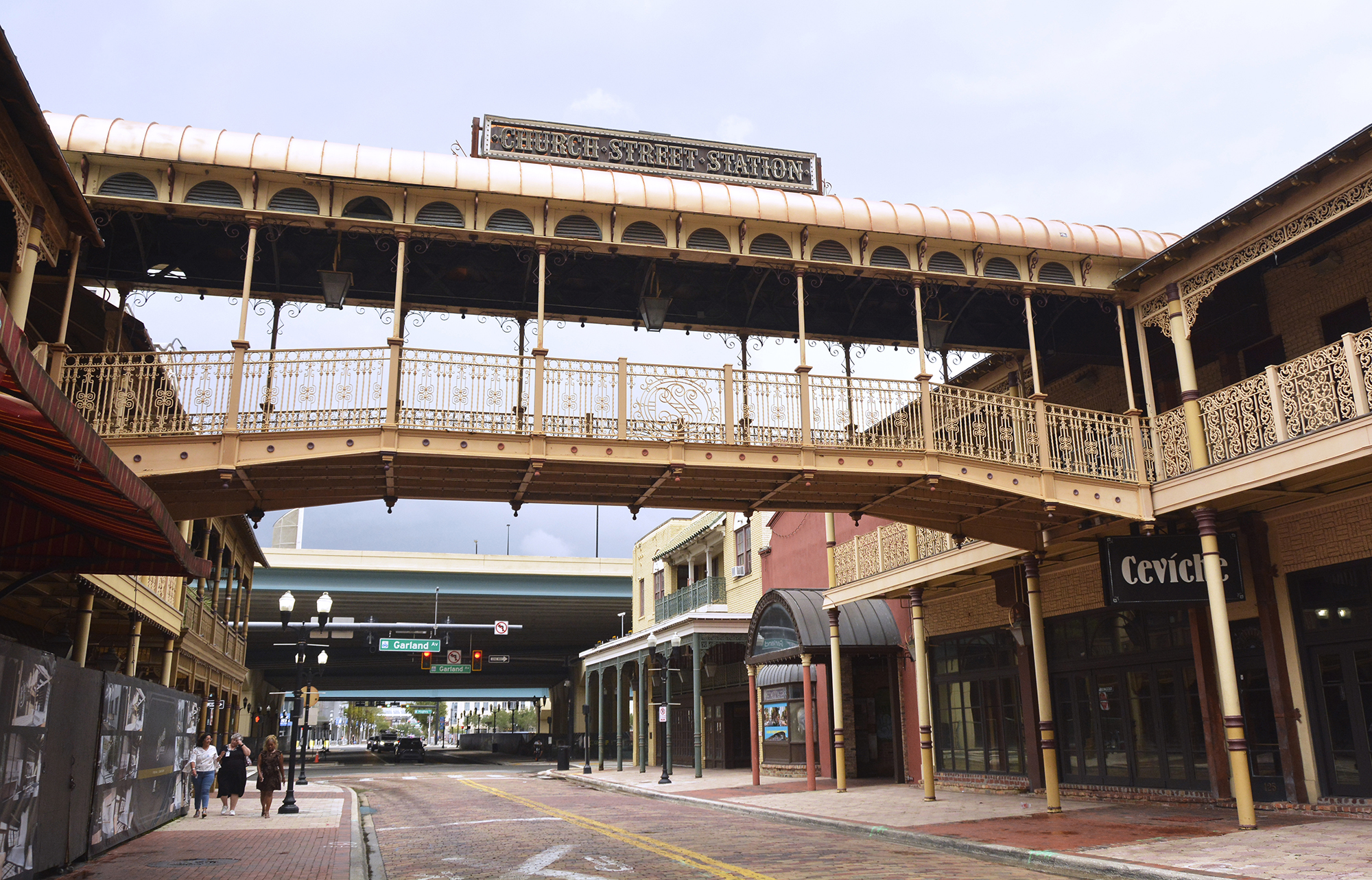 Moratorium opponents cited Church Street renovations as examples of historic projects approved by the HPB. Photo by Jim Carchidi
In his presentation of the ordinance, City Planning Division Manager Jason Burton said major project proposals for the district don’t make it past the pre-application stage because they don’t meet standards for the rehabilitation of historic building designs. However, longtime HPB member Jeffrey Thompson noted board approvals for a renovation to the south side of Church Street station, the addition of the pedestrian covered bridge at Church Street Exchange, the 2023 demolition of the Orchid Ballroom, and the addition of the Kia Center, which is located in the district.
“It's hard for me to accept the argument that HPB does not have flexibility for permited redevelopment,” he said.
Thompson was one of 11 residents to speak against the proposal. Fellow HPB member David Martens expressed shock at the city’s handling of the matter and hoped the board could still be part of the conversation. “Why have we not been engaged to be part of the planning of this redevelopment opportunity?”
District 4 Commissioner Patty Sheehan – City Council's only vote against the proposal – apologized to attending HPB members for having been left out of the process. “Bob Snow is rolling over in his grave,” she said in reference to the founder of Church Street's Rosie O’Grady’s, who was a staunch supporter of historic preservation.
Instead of a moratorium, Sheehan said development exceptions should be ruled on a case-by-case basis and accused the city of skewing the number of approved historic district projects in order to make a point. “The same people who complain about historic preservation are the same ones who complain about permitting,” she said. “And we’re not talking about getting rid of that.”
The need for compromise
District 2 Commissioner Tony Ortiz spoke in favor of helping building owners who are trying to manage the expensive upkeep of historic properties, but said the process requires communication between all sides.
“Nobody is trying to steal anything from anybody, nobody is trying to be sneaky,” he said. “Let’s not become too negative about this. We can move forward as a community as we have done in the past.”
Next steps
Commissioners voted 5-1 to pass the first reading of the ordinance. The final reading is scheduled for the June 22 council meeting. If it passes, the Community Redevelopment Agency Advisory Board will consider the proposed property tax incentive program in August.
Sponsor: The Orlando Real is sponsored by the Pozek Group — the #1 real estate team in Orlando and the Official Real Estate Team of the Orlando Magic.
About the Author
Jim Carchidi is an Orlando journalist and photographer with previous work at the Orlando Sentinel and Orlando Business Journal. He covers development, arts, culture, and local stories for The Orlando Real.
Enjoy this blog post? Click here to subscribe for updates
Leave A Comment